
Welcome to the ADHD-ish ™ Blog

If you've ever Googled "why can't I just get my act together" at midnight, you're in the right place.
The ADHD-ish™ Blog is where business strategy meets brain science — written for entrepreneurs and small business owners who are tired of advice that wasn't designed for the way their minds actually work.
Whether you're officially diagnosed or just ADHD-adjacent, this is your no-fluff resource for building a business that works with your brain, not against it.
What You'll Find on the ADHD-ish ™ Blog
Every blog is grounded in 20+ years of clinical experience and real-world business strategy — not toxic positivity and generic productivity hacks.
Browse the blog for episodes, frameworks, and straight-talk insights on focus, decision-making, pricing, boundaries, and everything else nobody warned you about when you started your business.
New to the ADHD-ish Blog? Start anywhere. That's kind of our thing.
Oh, and if you’re more of a listener than a reader, check out the top-rated ADHD-ish™ podcast!

You Have Too Many Offers (And It's Not Your Fault)
If your offer suite has somehow grown into a sprawling list you can't explain in a single sentence, you're in the right place. When you are a business owner with ADHD, having too many offers is not a discipline problem. It's a wiring problem. Every time you create a new program, package, course, or workshop, your brain gets a massive dopamine hit. The work of consolidating and selling the same thing over and over does not. So you keep creating new ones. The offer suite keeps growing. And somehow you still feel underwater.

The Real Reason ADHD Entrepreneurs Can't Stick to a Price
You don't have an ADHD pricing consistency problem because you don't know what to charge. You have an ADHD pricing consistency problem because the moment of pricing is happening inside a freeze response, and your strategic brain isn't fast enough to catch it.
This is not a confidence issue. This is not a money mindset issue. This is rejection sensitivity in a business setting.

Why "I Work Better Under Pressure" Backfires for ADHD Business Owners
ADHD-ish Blog: As an ADHD mindset and motivation podcast, we need to address what mainstream mental health conversations miss. To be completely honest, most of what circulates during Mental Health Awareness Month simply doesn't fit people like us. When your business appears successful, and your life looks polished to the outside world, it's easy to dismiss public reminders that you might need support.

Build The Team You Actually Want Through Autonomy, Mastery, Ownership
ADHD-ish Blog: Ian Wilson is someone whose entrepreneurial journey and business wisdom are refreshingly unconventional and resonant for anyone—especially entrepreneurs navigating the world with an ADHD brain. Right from the start, it was clear that Ian Wilson and I share not only an understanding of the neurodivergent entrepreneur experience but also a deep appreciation for those who chart their own path, often in direct opposition to the mainstream advice handed out by traditional business "experts." His approach to communication and leadership offers a powerful alternative to conventional business wisdom.

ADHD Decision Fatigue: What Helps When Your Brain Says 'Whatever'
ADHD-ish Blog: As the host of the ADHD-ish ™ Podcast, I've spent countless hours talking with neurodivergent entrepreneurs who, like me, are navigating the ever-changing landscape of running a business with an ADHD brain. In this blog post, I wanted to crack open a topic that's both deeply personal and incredibly common among my clients and readers: what really happens when our mental fuel tank hits empty.

Why Dismissing Tiny Wins Hurts ADHD Motivation
ADHD-ish Blog: Female entrepreneurs, especially those neurodivergent, are often dismissed by others for doing things differently and, as a consequence, set impossibly high bars for themselves. Risa Williams articulated how toxic dismissiveness becomes—how even the achievement of everyday tasks fails to register as worthy of recognition unless it meets a superhuman standard. This directly impacts ADHD mindset and motivation—when we dismiss our wins, we deplete the very fuel we need to keep going.

How to Use ADHD Medication Strategically as a Business Owner
ADHD-ish Blog: There's a narrative that's been given to those of us with ADHD for decades, and it sounds deceptively simple: ADHD means your attention system is broken, and stimulant medication—Ritalin, Adderall, Vyvanse—fixes it. Logical, right? I believed it for years—not just as someone with ADHD myself, but as a licensed clinical social worker, psychotherapist, and now as the host of the ADHD-ish Podcast. But today, I want to pull back the curtain on what's really happening in our brains when we take these medications, and more importantly, what that means for us as entrepreneurs. Understanding why neurodiversity is good for business starts with accurate information about ADHD medication and how our brains actually work.

ADHD & The Lifetime Legacy of Bullying: Healing the Pain
ADHD-ish Blog: One of the cruelest impacts of chronic bullying is the way it reshapes our internal world. As Brooke and I discussed, many people with ADHD internalize the constant criticism and "corrective" feedback, coming to believe that the problem resides within. Years of being othered, misunderstood, or called out can lead to anxiety, depression, and even dissociation—a survival mechanism designed to temporarily shield us from pain. This contributes significantly to ADHD and rejection sensitivity.
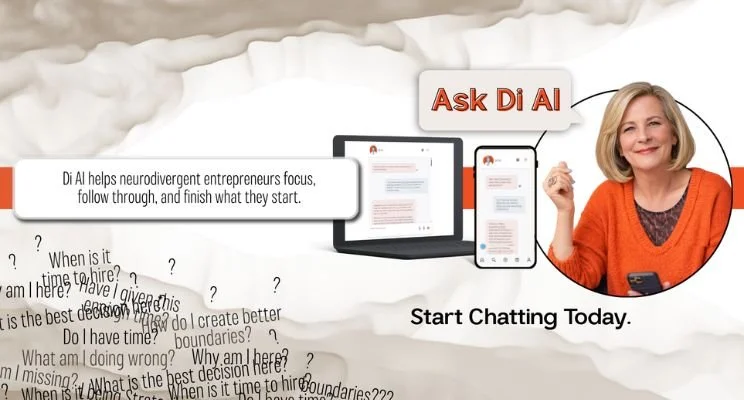
Introducing Di AI, My ADHD Business Coach Digital Clone
ADHD-ish Blog: With the advent of sophisticated AI platforms like CoachVox, I finally found a way to make cloning (sort of) practical—but not in the sci-fi, parallel-life sense. Instead, I envisioned a digital clone as an extension of my coaching brain—a tool that could give my clients and community strategic feedback, decision support, and a slice of my candid, experienced business perspective any time, day or night.
Best Business Pivot Strategies for Creative Entrepreneurs
For neurodivergent entrepreneurs, small business ownership is rarely a straight line. The pressure to pick one thing and stick with it can leave us feeling stuck when our interests shift or we lose steam. I sat down with creative serial entrepreneur Megan Eckman, whose story of continual reinvention is a masterclass in sustainable entrepreneurship. Society idolizes grit, but that's a recipe for deep burnout. Megan's journey offers a nuanced model for creative entrepreneurs: multiple pivots, gradual swaps, and knowing when to stop. She shares three strategies: the test-and-build pivot (test, prototype, and build a new path while the old one winds down—this business pivot strategy methodically reduces risk); the hard stop (ending a successful project when it no longer aligns with who you are); and hibernate and evolve (pausing without panicking to explore new avenues). Ultimately, successful neurodivergent entrepreneurs thrive through relentless curiosity. Sustainable success in small business ownership depends on honoring your own cycles—experiment boldly, exit gracefully, and stay curious. Your business is allowed to evolve as quickly as you do.

How ADHD Gender Bias Leads to Delayed Diagnosis
Have you ever felt like everyone had the rulebook to life but you? If you're a woman with late-diagnosed ADHD, this blog post peels back the layers of what delayed ADHD diagnosis really costs—especially for those running their own businesses—exploring the unique ADHD strengths and struggles that emerge from years of misdiagnosis. ADHD has long been defined by its visibility in young, hyperactive boys, shaping a diagnostic system so narrow that generations of girls and women simply didn't fit the mold. This ADHD diagnosis gender bias has left countless women undiagnosed for decades. Girls were labeled "spacey" or "full of potential if only they'd apply themselves." I describe decades spent battling my own brain, internalizing "lazy, scattered, too much." Understanding adult ADHD and delayed diagnosis reveals how these struggles compound over time. The absence of a diagnosis meant fighting symptoms—anxiety, depression—rather than the root cause. Late-diagnosed women develop remarkable grit, adaptability, and self-reflection—ADHD strengths and struggles forged in the crucible of misunderstanding.

Stop Executive Function Impairments with Cognitive Ergonomics
ADHD is often discussed in terms of visible symptoms—distraction, procrastination, and executive functioning challenges. But what if there was a deeper way to translate those behaviors into actionable insights? In this episode of my ADHD mindset and motivation podcast, Jeff Copper introduces cognitive ergonomics, an engineering-based paradigm that focuses on the underlying mechanisms of ADHD. This approach represents a significant evolution in ADHD executive coaching methodology. One standout tool is the "attention scope"—simulated experiences that let you actually experience your cognitive patterns, moving self-awareness from intellectual insight into embodied understanding. The result? A practical method for recognizing situations that trigger executive function impairments and clearer strategies for accommodation through ADHD executive coaching. What's the most overlooked ADHD accommodation? Direct oral conversation—talking things through to clarify ambiguity. This isn't just helpful; it's vital. Voice memos, Voxer chats, and coaching calls are legitimate cognitive accommodations that address executive function impairments. Cognitive ergonomics gives these methods the validation they deserve.

Which Company Culture is Your ADHD Brain Building?
Many entrepreneurs with ADHD launch their ventures envisioning innovation and teamwork—without realizing they're shaping the fundamentals of small business ownership through company culture. Those foundational cultural values often spring directly from an ADHD brain's unique wiring. Understanding the intersection of ADHD and leadership is essential for intentional culture building. Culture emerges organically from how your brain operates day-to-day, directly impacting the company culture image you project to employees and clients. Most ADHD founders unwittingly create an "accidental adhocracy"—a hotbed of new ideas, fast pivots, and constant disruption. You might start dozens of projects but finish a handful. Employees experience this as chaos: shifting priorities, unclear direction, and burnout. Another common ADHD-driven default is the accidental clan culture—collaborative in appearance, but deeply conflict-avoidant underneath. The same traits that create chaos can fuel intentional innovation if paired with structures and strategic hires. This strategic approach to ADHD and leadership transforms your small business ownership experience.

Neurospicy Entrepreneurial Skills: Get Stuff Done With Joy
When most people think of productivity hacks, joy isn't usually the first thing that comes to mind. But according to neurospicy founder Alexis Hope, joy is not just an afterthought for neurodivergent folks—it's an essential ingredient for getting anything done. Understanding neurodiversity in business means recognizing that joy isn't optional; it's fundamental to executive function for neurospicy brains. For neurodivergent people, motivation is about neurochemistry—dopamine being the star player. Tasks require elements of interest, novelty, or challenge, which is where the ADHD curiosity stream becomes essential—constantly feeding your brain new inputs that spark engagement. Alexis believes finding motivation through mutual accountability and shared joy can turn even tedious tasks into something dopamine-worthy—a perfect example of neurospicy entrepreneurial skills in action. For neurospicy entrepreneurs, seeking out joy, curiosity, and connection isn't childish or indulgent—it's a productivity imperative and competitive edge. When you approach executive function through the lens of joy and embrace neurodiversity in business, the results are transformational.

Neurodiversity in Business: Fix the ADHD Follow-Up Problem
If you have ADHD, you may find yourself constantly playing catch-up on commitments—forgetting promises made in a flurry of good intentions. Understanding neurodiversity in business means recognizing how these patterns impact professional relationships and credibility. This isn't just about dropped balls—it's juggling 17 balls in six places with zero strategy. Six key reasons explain why: impulsive generosity gives us a dopamine hit from being helpful before thinking through whether we can actually deliver. Working memory deficits mean we can only hold three or four mental sticky notes instead of seven or eight. Time blindness swallows our "later today" intentions. Context fragmentation scatters commitments everywhere. Object permanence ADHD makes voice memos vanish from mental view once we sit at our desk. And the shame spiral causes ghosting out of embarrassment. I created the "Follow-Through Filter"—a three-stage strategy to tackle ADHD follow-up woes. With systems tailored for neurodiversity in business, you can turn scattered promises into completed commitments.

ADHD Strengths and Struggles: 3 Hard Truths, 0 Apologies
After more than five years and 300 episodes of the ADHD-ish Podcast, I've learned some hard truths about ADHD entrepreneurship that need to be said out loud. First: your self-doubt isn't wisdom, it's trauma. Entrepreneurs with ADHD often fall into cycles of overthinking, paralyzed by the need to anticipate every outcome. But ADHD entrepreneurship requires self-trust—making intuitive guesses and course-correcting when you get it wrong. Second: there's no magic pill. What most of us seek is a way to avoid discomfort, not solutions. True growth in ADHD mindset and motivation comes from building the capacity to do hard things, not from finding tools that make those things disappear. Third: your ADHD is not a get-out-of-jail-free card. There's a difference between "ADHD explains my challenge" and "ADHD excuses me from figuring this out." Stop the overthinking, refuse to apologize for who you are, and remember: imperfect action beats perfect planning every time. This is the foundation of sustainable ADHD mindset and motivation.

ADHD & Working Memory Challenges Affecting Your Business
If you've ever lost a million-dollar idea somewhere between the shower and your notes app, you're experiencing one of the core adhd memory challenges entrepreneurs face. Working memory isn't just short-term memory—it's your brain's scratch pad, responsible for actively holding and manipulating information. For ADHD brains, it's like running heavy software on outdated hardware. Traditional adhd brain training approaches focus on strengthening the brain, but the evidence shows limited real-world impact. Here's the tough pill: you can't dramatically expand your working memory capacity through adhd brain training alone. But understanding your adhd strengths and struggles means recognizing when to stop relying on willpower and start building external systems. The real power move is reducing the load on your working memory and building systems that do the heavy lifting. When you externalize your business systems out of necessity, you actually get a competitive edge: your business becomes more scalable, reliable, and ready to grow. Your working memory may be limited, but your potential for success isn't.

ADHD Novelty Seeking: Use Pop-Up Offers for Growth & Fun
Pop-up offers aren't just mini-discounts—they're unique, time-limited packages that emerged from a classic ADHD novelty seeking impulse: the irresistible urge to act on a creative idea. This conversation with copywriter and ADHD entrepreneur Erin Ollila demonstrates why neurodiversity is good for business, showcasing how mini offers for small business marketing can serve both clients and entrepreneurs' brains. For ADHD business owners, pop-up offers provide immediate gratification and variety, combating the energy drain that accompanies longer-term projects while satisfying ADHD novelty seeking tendencies. These bite-sized service options deliver quick wins without requiring months of prep—perfect mini offers for small business marketing. By packaging skills already used in client work, you deliver strategic roadmaps that provide lasting results. This adventurous, iterative approach is a hallmark of ADHD entrepreneurship: embrace experimentation, don't personalize the bumps, and always be ready to pivot. Smart pop-up offers prove why neurodiversity is good for business by transforming neurodivergent traits into competitive advantages.

Breaking the ADHD Burnout Pattern: Stop Overcompensating
If you're an entrepreneur with ADHD, chances are you've lost count of the nights you've stared at your computer, debating whether to add "just one more thing" to a project that's already good. Understanding how ADHD strengths and struggles make you stronger is essential for breaking this cycle. In this episode, ADHD entrepreneur coach Diann Wingert dives into a rarely discussed pattern: never knowing when you've done enough. This chronic uncertainty leads to overdelivering, overworking, and an endless hunt for "safe" territory—a direct path to ADHD burnout. The urge to keep working isn't about ambition; it's about an internal meter that doesn't know where to stop. Diann presents the "Enough Already" framework—five steps to recalibrate your inner meter and prevent ADHD burnout. Redefining "enough" isn't about lowering standards—it's about staying in the game long enough for your excellence to compound. As ADHD entrepreneur coach Diann Wingert says, "Exhaustion isn't strategy—sustainability is." Every hour you over-polish is energy stolen from future growth.
Neurodivergent Women: Better Communication and Leadership
Dr. Dante coined the term "neurobaddies" on TikTok to rebrand neurodivergent women as beautifully unique and admirably strong. He insists that traits like honesty, hyperfocus, and authentic passion make neurodivergent women exceptional—not just in relationships, but in communication and leadership. But years of negative feedback create internalized doubts. For ADHD women, emotional sensitivity is a hallmark—we experience intense emotions, react sharply to rejection, and struggle with regulation. We rarely do things by halves: "I refer to it as being full ass or no ass." This relentless drive fuels entrepreneurial success but also creates vulnerability. Narcissists are drawn to our empathy, honesty, and willingness to overlook red flags. Hyperfocus and the tendency to self-blame make us especially susceptible. Healing demands reclaiming the neurodivergent narrative, not waiting for permission from neurotypicals. The neurodivergent edge isn't just about surviving challenges—it's about reshaping the conversation and building businesses where different truly means better.