A Diagnosis Isn't Required for Neurodivergent Self-Trust
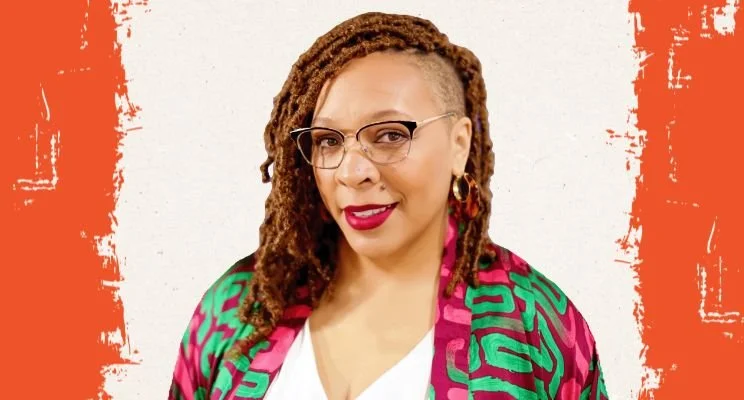
The last time she joined me on the podcast we were both in different places: at that time, the podcast was called The Driven Woman Entrepreneur, and Naketa was talking about why selfish self-care is not only justifiable, but necessary.
In our latest conversation, we dove into why so many people find workplaces frustrating—not because of the actual work, but because of the unresolved baggage and behavioral patterns people drag in from their families of origin.
As the host of the ADHD-ish™ Podcast, I've had the privilege of having conversations with courageous, insightful, and truly memorable people, but my latest episode with my friend Dr. Naketa Ren Thigpen, lingers in my mind in the best possible way. Naketa has worn many professional hats—the therapist's hat, the coach's hat, the transformational speaker and consultant's hat—and beneath each is an unwavering devotion to strengthening relationships in both life and business.
The last time she joined me on the podcast we were both in different places: at that time, the podcast was called The Driven Woman Entrepreneur, and Naketa was talking about why selfish self-care is not only justifiable, but necessary. Much has changed since then, and what strikes me now is how Naketa has guided her journey away from individualized, one-on-one therapeutic relationships and toward helping mid-market organizations redefine the very essence of workplace relationships.
Each time she evolves, whether she's leaning into her role as a grandparent or systematizing her life's work into the Applied Relational Intelligence Systems methodology, she's still exploring the same through line: a legacy of stronger human connections wherever her work may go.
In our latest conversation, we dove into why so many people find workplaces frustrating—not because of the actual work, but because of the unresolved baggage and behavioral patterns people drag in from their families of origin. It's the unspoken traumas and trust issues, the old rivalries and projections, that turn corporate teams into minefields of miscommunication. As a psychotherapist, I've long believed that the skill sets we hone in family therapy—emotional intelligence, relational navigation—ought to be embedded into the fabric of organizational life. To hear Naketa applying this at scale, in ways that clients and HR departments can embrace, feels like a breath of hope in an environment so often marked by "quiet quitting" and emotional burnout.
What fascinates me is the honesty with which Naketa acknowledges how she balances these depths. She is candid about the aspects of intimacy that corporate culture still resists—how we transmute creativity out of libidinal energy, for instance, and why she keeps a private advisory for those ready to go deeper than HR protocol allows. Her willingness to hold space for both the 80% that's safe for mainstream consumption and the 20% that demands brave intimacy is, from my perspective, exactly what makes her leadership resonate in spaces where others often stumble.
We also reflected on the lived experience of being neurodivergent in a world that habitually designs for the "norm." Both she and I have known that we process, perceive, and approach problems in ways that defy easy explanation. For me, the official ADHD diagnosis came later in life, after years of working as a therapist, coach, and the parent of neurodivergent kids. For Naketa, formal diagnosis is unnecessary—she knows, unequivocally, that she is neurodivergent, but she chooses not to seek an external label. Instead, she's built a life and a career around workarounds and creative accommodations, trusting in her self-awareness and the power of support networks to guide her journey. This is neurodiversity at work in its most personal, unfiltered form.
Here, in this divergence of experience, was one of our richer exchanges of opinion, though not conflict—more of a mutual sharpening. I acknowledged the safety and access that a diagnosis can provide, especially for children who need institutional support, and pointed out that if you're so adept with your systems of compensation that you're not experiencing true impairment, the label may not apply anyway. Naketa graciously reframed her own perspective to talk about "workarounds" more than "masking," owning that her workaround toolkit is the result of a life spent counterbalancing the challenges of her unique wiring. She doesn't need the label, nor does she see neurodivergence as something inherently negative that needs correction—unless, as in the case of her grandchildren, additional resources become necessary.
What matters most, I believe, is that Naketa embodies the spirit of neurodivergence not as a brand, but as a lived philosophy. She brings a near-sacred presence to any conversation—an intimacy that's not just relational, but spiritual, and which extends from her professional life to her every interaction. I've long admired how she eliminates distractions so she can be utterly present, not only for others, but for herself and her most important work. It's a hard-fought lesson: that being self-employed, especially as someone on the path of continuous personal and professional evolution, demands radical self-trust and the ability to re-anchor in what matters when others don't see—or can't appreciate—the "music" of our lives.
Looking back at our exchange, I am struck by how very much our points of view align, even when we approach the crossroads from opposite directions. We both resonate deeply with the restless need to grow, to share, and to build environments that honor difference rather than demand assimilation. Where we diverge—on the necessity or relevance of a diagnostic label—there is not tension, but complementary wisdom. She teaches me (and all of us) that the true gift of being "ADHD-ish" is not the diagnosis, but the adaptation: the way we make ourselves whole, the presence we bring to our relationships, and the legacy we leave by helping others navigate these nuanced spaces.
If there's a single thread that runs through the conversations Naketa and I share publicly as podcast episodes and blog posts is this: the imperative of living and leading with authenticity—inside of organizations, outside in our own ventures, and within the vulnerable core of our relationships. It's not about measuring up to neurotypical standards, or even flying the flag of neurodiversity for external validation. It's about honoring the beauty and the complexity of how each of us thinks, feels, connects, and flows.
At the end of this conversation, as always, I left feeling more grounded, more inspired, and more fiercely committed to hosting these kinds of honest, ongoing dialogues on the ADHD-ish™ Podcast. Whether you're seeking a label or eschewing one, may you find wisdom—and maybe a little courage—in how Naketa lives her truth, without apology and with an intimacy that creates real change, one relationship at a time.
Feel free to DM me on LinkedIn or send me an email at diann@diannwingertcoaching.com. I'd love to hear your thoughts!
If you'd like to hear the full episode on the ADHD-ish ™ Podcast, you can do that here.