ADHD Personal Branding: Why Overthinking Is Your Advantage
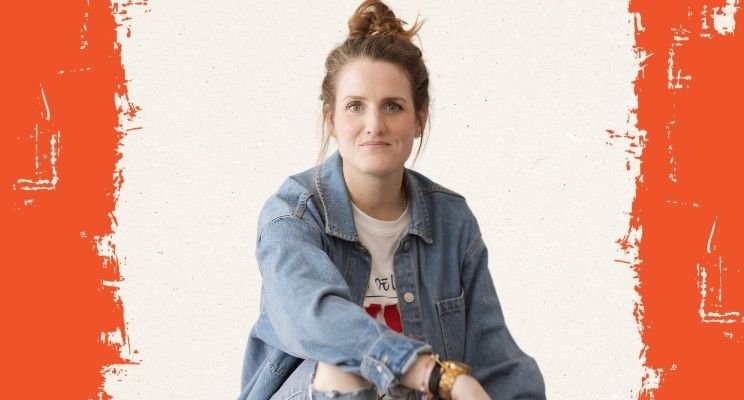
Kristina began her story where so many women's ADHD journeys start:
feeling overlooked for decades by a system that sees our struggles as anxiety, depression, or "just" overthinking. She recounted her diagnosis story, which, like mine and so many of yours, didn't arrive until adult life forced a tipping point—her daughter's birth.
I've spent years getting to know incredible entrepreneurs, experts, and creatives with ADHD traits, but every so often a conversation truly changes the way I see the intersection between ADHD, storytelling, business, and identity. Brand strategist Kristina Flynn introduced me to one of those transformative moments. As a super-curious human, nothing excites me more than digging into the whys beneath the hows—especially when it comes to ADHD personal branding and the stories we tell ourselves about who we are and the value of what we do in our business or craft.
Kristina began her story where so many women's ADHD journeys start: feeling overlooked for decades by a system that sees our struggles as anxiety, depression, or "just" overthinking. She recounted her diagnosis story, which, like mine and so many of yours, didn't arrive until adult life forced a tipping point—her daughter's birth. Hearing her describe that period, I found myself deeply identifying with the pain and confusion of being "treated" for everything but the real issue. She spoke candidly about her anger and confusion, about how her ADHD could go undiagnosed for so long despite years of mental health care. Her frustration echoed my own professional and personal observations about the failings of our diagnostic system for women and girls with ADHD. It’s truly maddening how commonly ADHD gets overlooked beneath a pile of other labels. Kristina and I agreed that had the ADHD been addressed earlier, much suffering and disorientation could have been avoided.
Where Kristina’ story truly became electric was when she began describing how overthinking - so often pathologized in the ADHD community - can actually be an advantage. I've long believed that the ADHD brain, for all its diagnostic baggage, contains powerful assets—creativity, intuition, relentless curiosity—that thrive in the right ecosystem. Kristina took this a step further, describing her journey from trying to "fix" her ADHD overthinking to realizing it was a source of nuance, pattern recognition, and eventually business innovation. Rather than seeing rumination and hyperawareness as liabilities, she interpreted them as the raw materials for extraordinary insights—if we learn to distinguish between productive overthinking and the kind that stifles action.
What fascinated me even more was Kristina’s approach to ADHD personal branding for entrepreneurs. She argued, and I agreed, that too many of us are trying to figure out "who am I and what do I do?" in isolation, through endless self-assessment worksheets and solo reflection. We talked at length about how the brain's negativity bias—its tendency to recall failures over triumphs—sabotages these solo exercises. I couldn't help but recall my coaching clients, most of whom are brilliant, well-trained, and completely fascinating, yet deeply convinced they're nothing special. Kristina introduced the concept of "narrative identity"—where we collect fragments of feedback and social cues over our lives, internalizing them into limiting beliefs—I felt such resonance that I became even more convinced that branding work for ADHDers is as much therapy as it is marketing. There is something incredibly powerful about re-writing your own personal narrative and using it to introduce people to your work.
One of my favorite insights from talking with Kristina was the "big story" trap: how those of us with unconventional, messy, non-linear careers discount the value in our zig-zagged paths, when in reality those paths reveal precisely the genius, adaptability, and resilience that make for powerful brands. Kristina revealed her framework for helping clients find the red thread that connects their seemingly random life experiences, shifting the focus from building a story for external validation to anchoring it in self-knowledge and, crucially, self-trust.
That word—trust—kept coming up. We both agreed, sometimes with laughter, sometimes with visible vulnerability, that building a sustainable brand and business as an ADHDer requires a level of self-trust that can only be developed through micro-experiences of showing up, sharing authentically, and tolerating whatever feedback comes your way. We also explored the daunting space of content creation, a supposed "must" for modern entrepreneurs. Both of us confessed our own resistance to churning out content for algorithmic approval, realizing instead that the magic happens when you create from context, not just for content's sake. Kristina shared her practice of "overthinking in public" as a fresh option, sharing unfiltered ideas as a path to connection rather than a polished marketing strategy. This mindset shift—seeing brand building not as self-promotion, but as a service, as a relationship with your audience—felt wonderfully aligned with my own evolution out of the confines of clinical psychology and into the larger, messier world of online business. We recognized both the terror and liberation involved in unmasking and occupying your authentic story in the public eye—especially when stepping away from traditional roles or corporate safety nets.
Both Kristina and I have made the decision to introduce AI into our businesses, in fact it is how we originally met and connected. Mine is called “Di AI” and Kristina’s is “K-Bot.” Though some might worry that AI homogenizes voice, Kristina views it as a tool for scaling self-reflection and understanding, not replacing authenticity. We both agreed that with the right inputs—data about your own voice, preferences, and patterns—AI can be trained to enhance, not erase, what's unique about you. But the caveat remained: this only works when the human at the center knows what makes them different and has done the work of connection and meaning-making. This is especially true for ADHD personal branding, where the temptation to outsource self-definition to a tool is genuinely risky.
Kristina’s insights about the ADHD overthinking brain, with its wild tangents and endless associations, convinced me that it is truly not a bug, but a feature, when used in a skillful way. It can be the root of our most valuable insights and the driver of the truly compelling brands we're meant to build. I’d even make this claim:Kristina and I are co-conspirators in a movement to reclaim ADHD quirks as markers of brilliance, not pathology.
For anyone reading who finds themselves stuck—ashamed of their story, stalled by overanalyzing, or petrified of "putting themselves out there"—know this: the first step is accepting that none of your detours or so-called failures are wasted. As Kristina Flynn powerfully shares - radical self-acceptance (even amidst discomfort and imperfect progress) is the true foundation for building a business, a brand, and a life where your uniquely wired mind isn't just tolerated, but celebrated. When we find the courage, structure, and community to mine our "too-muchness" for meaning, we don't just make peace with our ADHD—we turn it into our greatest unfair advantage.
If you'd like to hear the full episode on the ADHD-ish™ Podcast, it’s episode #328.