ADHD founder self-doubt isn’t a character flaw.
It’s a rational response to a lifetime of being evaluated by systems that weren’t designed for neurodivergent brains — and consistently coming up short by their standards.
ADHD founder self-doubt has a particular flavor that sets it apart from garden-variety entrepreneurial uncertainty. It’s not just “will this work?” It’s “can someone with my brain actually do this?” It’s the question that arrives before the business plan, before the first client, before any evidence has been gathered in either direction — and it has a way of shaping every decision that follows, usually without anyone noticing that it’s running the show.
The shift from “Can I?” to “How can I?” sounds almost embarrassingly simple. It isn’t. For neurodivergent entrepreneurs who have spent years accumulating evidence — from school, from workplaces, from relationships — that their brains create problems rather than possibilities, that shift requires dismantling a self-concept that’s been built on the wrong foundation. It requires replacing a permission question with a strategy question. And it requires recognizing that the original question was never really about capability at all.
What Self-Doubt Actually Is
ADHD founder self-doubt isn’t a character flaw. It’s a rational response to a lifetime of being evaluated by systems that weren’t designed for neurodivergent brains — and consistently coming up short by their standards.
The school that graded you on your ability to sit still. The employer who measured performance by attendance rather than output. The productivity systems that assumed your motivation operated on a linear schedule. Every time you tried to fit into a structure that wasn’t built for how you actually think, and struggled, the internal narrative accumulated another data point: something is wrong with the way I work.
By the time most late-diagnosed ADHD entrepreneurs arrive at entrepreneurship, they’re carrying a backlog of that evidence. They know what they’re capable of in the right conditions. They also know how badly things can go in the wrong ones. And the question “Can I?” is really just the aggregate weight of all of it, showing up at the door of every new opportunity.
The Framework That Changes the Question
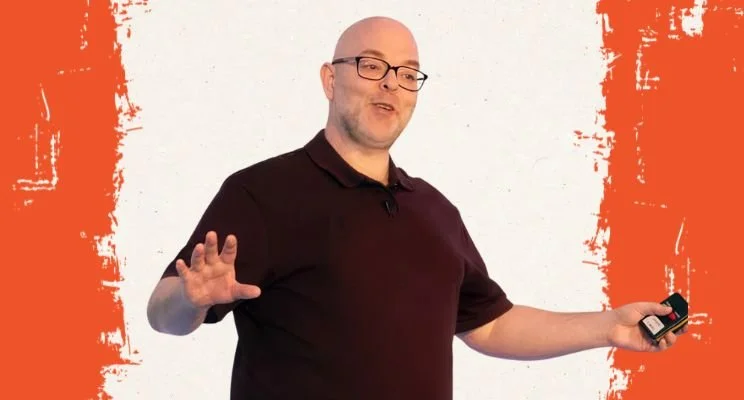
ADHD coach and former tech entrepreneur Phil Drinkwater offers a mapping of neurodivergent entrepreneurship that reframes the entire conversation — moving away from deficits and toward architecture. The question isn’t whether an ADHD founder can build a successful business. The question is what structures, supports, and design choices make success accessible given how this particular brain actually operates.
This mirrors what I see consistently in my coaching work. The entrepreneurs who thrive long-term aren’t the ones who managed to overcome their ADHD through discipline and willpower. They’re the ones who stopped requiring that of themselves. They designed around their wiring rather than against it — delegating the functions that drain them, automating what doesn’t suit their cognitive style, building external structures that carry what their internal systems struggle to hold.
“How can I?” is a design question. “Can I?” is a permission question. Only one of them leads anywhere useful.
Neurodivergent Shame and the Self-Concept Problem
Neurodivergent shame operates differently from ordinary embarrassment or self-criticism. It isn’t situational. It’s identity-level — the internalized belief that the way you’re wired represents a fundamental flaw, not just a difference. And it runs beneath the surface of most ADHD founder self-doubt, shaping decisions in ways that are rarely visible until someone names them.
Shame shows up in the proposals you undercharge on because some part of you isn’t sure your work is worth full price. It shows up in the visibility you avoid because being seen feels too risky. It shows up in the clients you accept despite red flags because turning away business feels like something you don’t have the right to do. It shows up in the projects you abandon halfway through, not because you lost interest, but because shame convinced you that finishing wasn’t something people like you could expect to do.
The attachment patterns that develop around early experiences of being “too much,” “not enough,” or simply different don’t stay in personal relationships. They travel into business. The founder who learned that love was conditional on performance will run a business that mirrors that pattern — always producing more, always proving, never quite arriving at the place where enough is enough.
Naming this isn’t pessimistic. It’s the prerequisite for changing it. You cannot design around a pattern you haven’t identified.
Building for the Brain You Have
The practical application of moving from “Can I?” to “How can I?” starts with an honest inventory — not of your weaknesses, but of the conditions under which you actually function well.
When does your focus show up reliably? What kinds of problems activate your thinking rather than drain it? Where does your executive function consistently fail, and what external structures have historically compensated for that? What kinds of client relationships energize you, and which ones create the specific flavor of depletion that leads to avoidance?
These aren’t soft questions. They’re design specifications. The answers tell you what kind of business model is likely to be sustainable for your wiring, what kinds of support you need to build in from the start rather than add in crisis, and where the leverage points are for your particular combination of strengths and challenges.
For founders navigating dual neurodivergence — ADHD alongside autism, anxiety, or other presentations — this inventory becomes even more critical. The interaction between different neurological profiles creates a specific set of needs that generic entrepreneurship advice almost never addresses. What reads as “simple” communication to a neurotypical founder may represent significant cognitive load. What looks like “inconsistent motivation” may be the entirely predictable result of an environment that doesn’t accommodate sensory or executive function needs.
The Mirror Problem
One of the most useful tools in addressing ADHD founder self-doubt is what Phil Drinkwater calls mirror-boarding — a practice of systematically tracking how far you’ve come rather than how far you still have to go. For neurodivergent brains, whose negativity bias tends to be calibrated toward risk detection and whose working memory makes it hard to hold a cumulative sense of progress, the past is genuinely difficult to access as evidence.
The founder who has built a six-figure business from scratch, navigated multiple pivots, retained clients through difficult stretches, and developed real expertise in their field will often still feel — in any given week — like they haven’t proven anything yet. Not because the evidence isn’t there, but because the internal accounting system doesn’t reliably tally it.
Creating an external record of progress — wins, milestones, client results, problems solved, pivots navigated — isn’t self-indulgence. It’s a cognitive accommodation. It gives the brain something concrete to look at when the internal narrative insists that nothing has been established.
What Self-Acceptance Actually Requires
Late diagnosis changes things, but it doesn’t automatically resolve the accumulated self-concept that preceded it. Understanding that there was a neurological reason for the struggles doesn’t erase the years of evidence that built the “Can I?” question in the first place. That work takes longer.
What I’ve seen consistently, both in my own experience and in the entrepreneurs I work with, is that genuine self-acceptance — the kind that actually changes how you make decisions — doesn’t happen through insight alone. It happens through accumulated experiences of showing up as yourself, doing the work from that place, and discovering that the version of you that isn’t performing or compensating or masking is the one that produces the most original and sustainable results.
The “How can I?” question isn’t optimistic thinking. It’s the decision to stop requiring permission from a system that was never going to grant it, and start designing from the inside out — using actual knowledge of how your brain works, what it needs, and what it can do when the conditions are right.
That’s not the absence of self-doubt. It’s what you build instead.